Full Capacity Living…
Can I Take a Supplement for That?
I hear this question almost every week.
Last week it came from a client who, months ago, made real changes to how she was eating and living life. Things had genuinely improved. Then life happened — the way it always does and the sweets and the late-night eating started creeping back in. Her doctor had once suggested a supplement for cravings, and she wondered if it was time to start it again.
Here’s the thing about supplements: we’ve quietly let them become medications with better marketing. Pop this, fix that. And I get the appeal. A bottle feels like control when everything else feels messy. But I’ve started to see poly-supplementation showing up in client intake forms the same way poly-pharmacy shows up in a chart: layer after layer, each one added to manage a symptom, none of them asking why the symptom is there in the first place.
To be clear… I’m not anti-supplement. There are real basics that deserve to be covered well. But a supplement for cravings without asking what’s underneath the craving is a shortcut that quietly costs you the real fix.
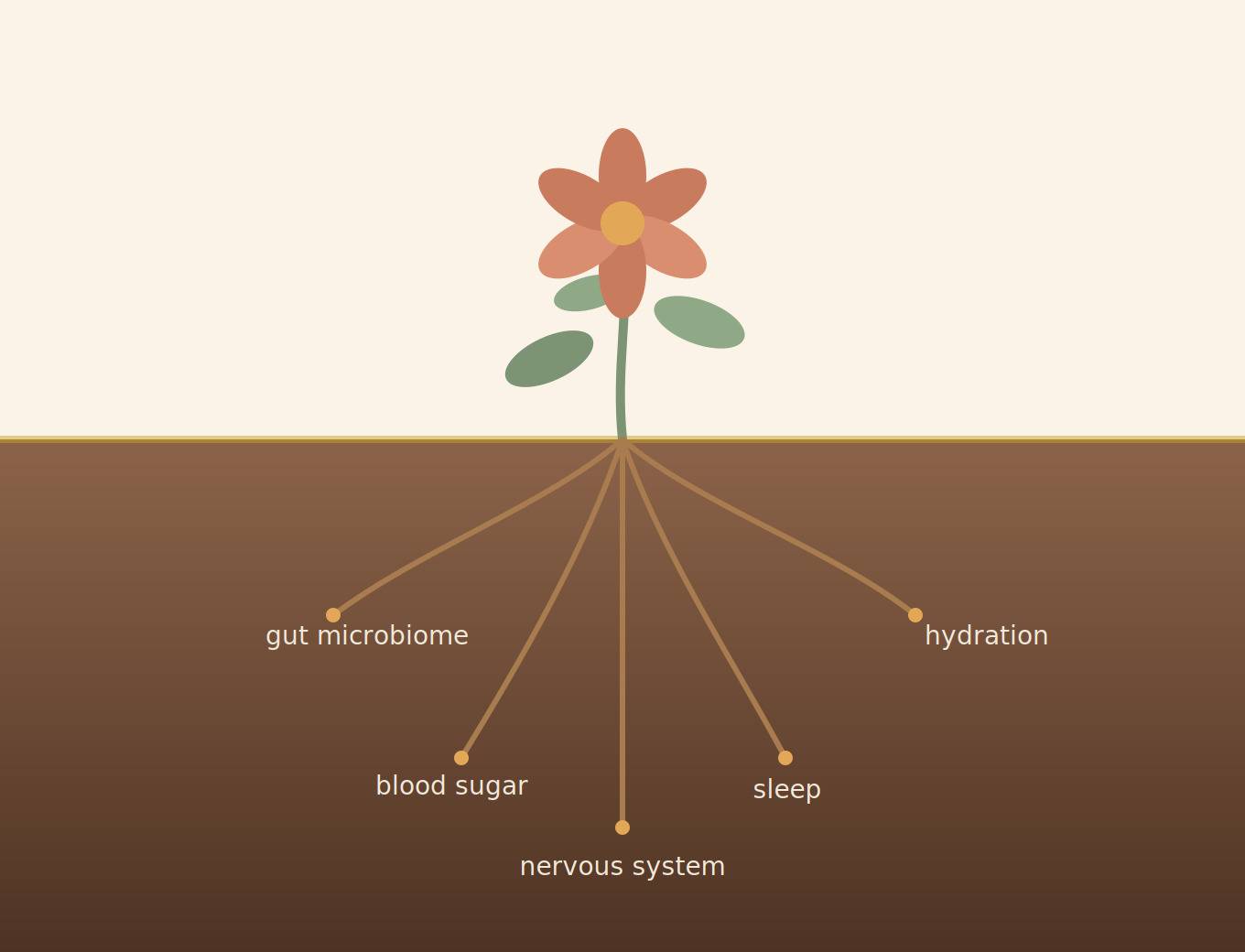
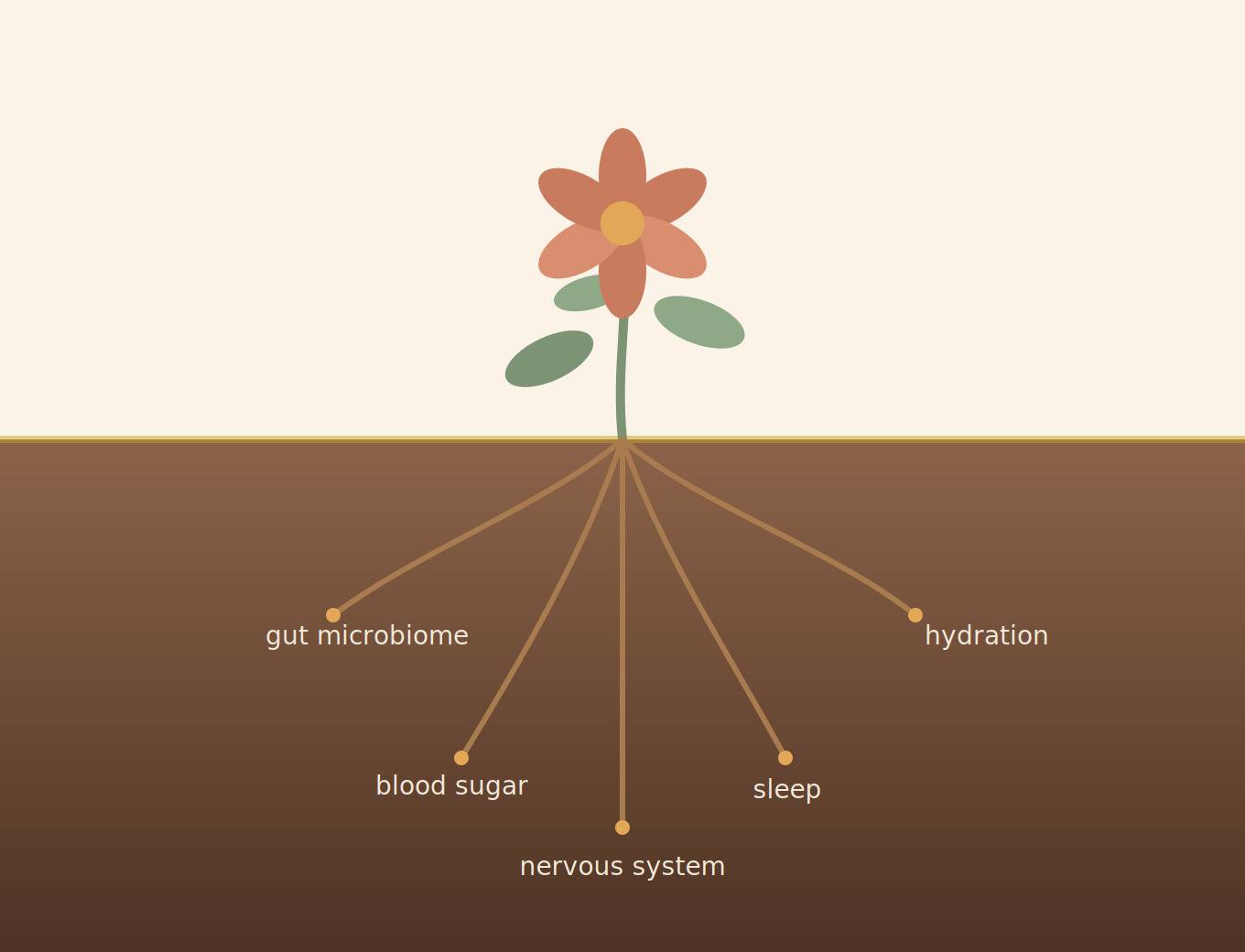
So what actually drives a craving for sweets and late-day eating? Usually it’s not just one thing:
- Gut bacterial imbalance. Certain gut microbes thrive on sugar and can influence cravings via the gut-brain axis — signaling through the vagus nerve in ways that feel a lot like “I need this,” when it’s really the bacteria that do.
- Blood sugar imbalance. Under-eating earlier in the day, or eating meals too carb-heavy without enough protein and fat, sets up a blood sugar dip by mid-afternoon — and the body reaches for fast sugar to correct it.
- Nervous system dysregulation. Stress raises cortisol, and cortisol drives cravings for high-sugar, high-fat foods — it’s a well-documented physiological response, not a willpower failure.
- Under-eating at meals. If breakfast and lunch aren’t enough, the body isn’t asking for dessert at 8pm — it’s asking for the calories it didn’t get earlier.
- Under-hydration. Mild dehydration is frequently misread by the body as hunger.
- Fatigue. Poor sleep disrupts ghrelin and leptin — the hormones that regulate hunger and fullness — which is part of why we crave more sugar and simple carbs on our most exhausted days.
Every one of these is lifestyle. Every one of these is solvable.
Through nutrition, sleep, nervous system tools, mindset work, movement. None of them require a bottle. What they require is an honest conversation with yourself about what’s actually going on underneath and then small, unglamorous adjustments, repeated daily.
That’s the part nobody wants to hear. It’s not exciting. There’s no “biohack” in it. It’s the boring stuff, done consistently.
I think of a line from M. Scott Peck’s opening to The Road Less Traveled: life is difficult. His point wasn’t pessimism, it was that once we stop expecting life to be easy, and truly accept that difficulty is simply part of it, something in us relaxes. We stop treating every hard moment as evidence that something’s wrong, and start treating it as evidence that we’re alive and growing.
Stanford psychologist Alia Crum’s research backs this up in a way I find genuinely reassuring: our mindset toward stress and difficulty changes how our body actually responds to it. People who view stress as something useful, rather than something purely harmful, show measurably different physiological and performance outcomes than people who view it as purely damaging. Belief itself is a biological input. (Her forthcoming book, BELIEVE: The Mind’s Power to Create Reality, is out in 2027 I’ll be first in line.)
This is exactly what the Institute for Functional Medicine points to when they talk about psychosocial-spiritual factors sitting at the center of the matrix, not a soft add-on, but the core that everything else radiates from. Mindset, nervous system state, meaning, and honesty with ourselves aren’t separate from gut health or blood sugar or cravings. They’re upstream of all of it.
So…not a supplement for that.
A conversation with yourself for that. Tiny tweaks. Every day. That’s the real secret sauce.
Reflection for the week:
Next time a craving hits, pause before you reach for anything, food or supplement.
Ask: where today did I come up short — nutrition, hydration, rest, or a moment to actually feel what I’m feeling and work through it?
In best health,
Karen