Full Capacity Living…
You’ve Been Eating Vegetables. But Are You Getting Their Nutrients?
Full Capacity Living | Tuesday Edition
It turns out, I didn’t know as much as I thought I did.
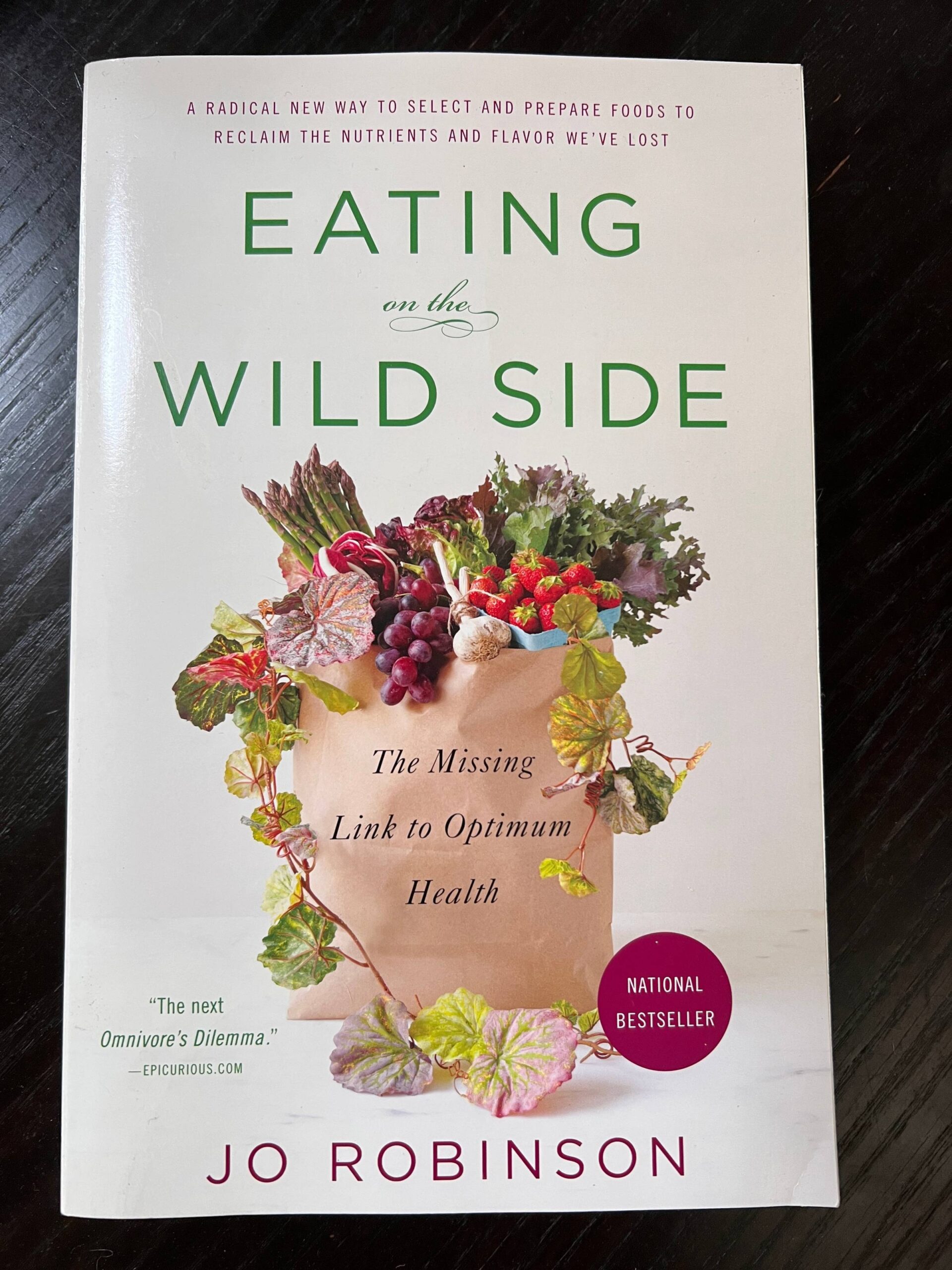
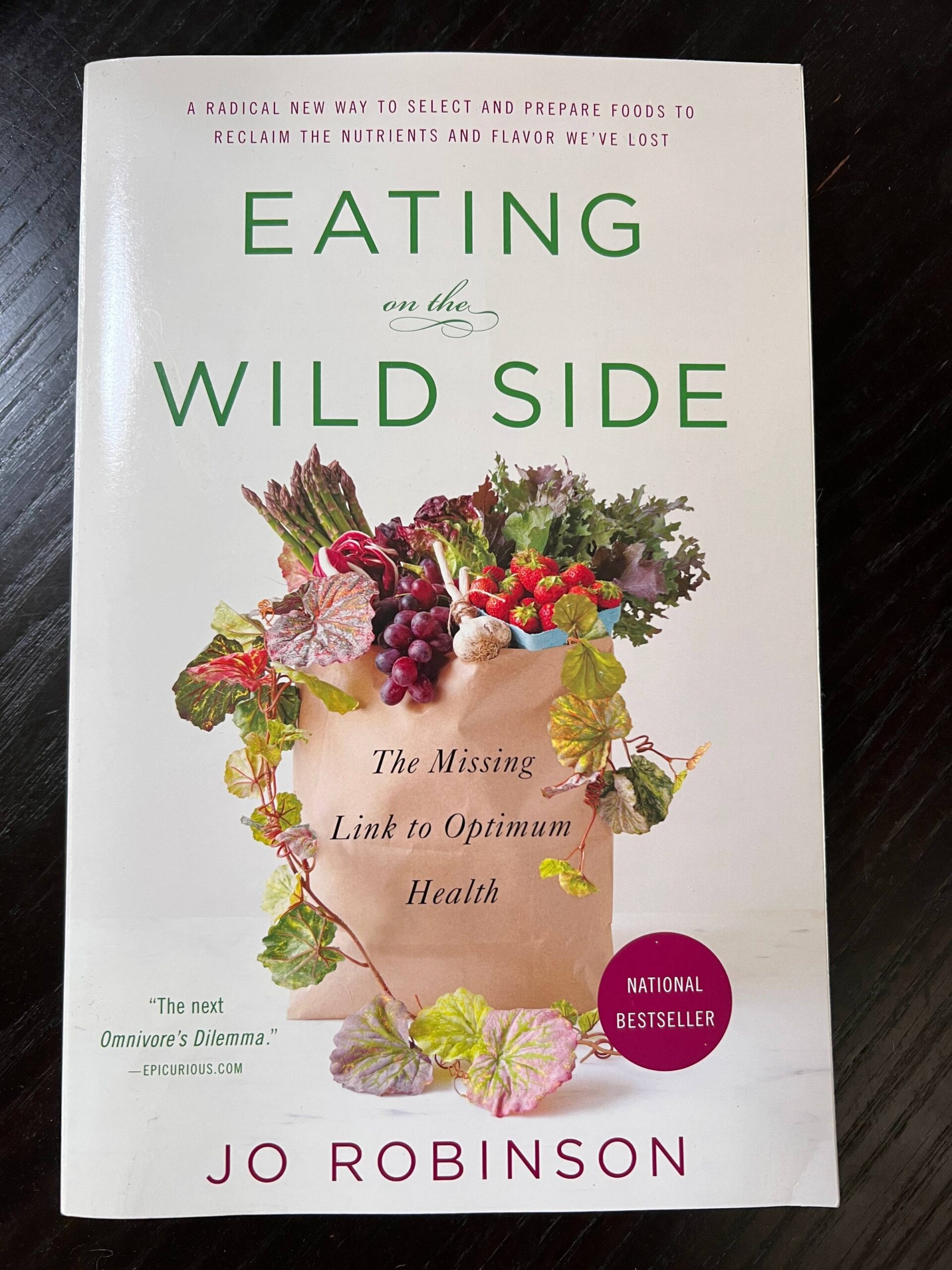
My grocery cart has always been loaded with vegetables and fresh fruit — berries, greens, radishes, even kohlrabi. I thought I had the produce aisle figured out. Then I read Eating on the Wild Side by Jo Robinson, and while I was already a fan of the basics, it was the subtleties that shifted things for me. Now my cart leans toward the bitter lettuces, the purple carrots, the darkest apples I can find. Corn has never been my thing, but the story she tells about it? Fascinating.
The book is Eating on the Wild Side: The Missing Link to Optimum Health by Jo Robinson, an investigative journalist who spent over a decade combing through more than 6,000 scientific studies on the nutritional history of our fruits and vegetables. What she found stopped me in my tracks. And I think it will do the same to you.
The Quiet Nutritional Loss Nobody Talks About
Here is the uncomfortable truth: for the past 10,000 years, ever since humans first began farming, we have been — without realizing it — breeding the nutrition out of our food.
Generation after generation, we selected for plants that were sweeter, larger, less bitter, easier to harvest, and better at surviving a long truck ride to your grocery store. All completely logical. And all quietly stripping away the phytonutrients, the powerful plant compounds that Robinson argues are among the most important things we can eat for long-term health.
Phytonutrients, sometimes called polyphenols, are not macronutrients. You won’t find them on a standard nutrition label. But as Robinson points out, they play a role in virtually every cell and system in the body, and the research on their connection to immune function, inflammation, hormonal balance, and disease prevention is growing every month.
The problem? These are precisely the compounds we have been reducing, in variety after variety, for 400 generations. And most of us have no idea.
The Corn Story — A Perfect Example
Corn is one of Robinson’s most striking examples, and it’s one I come back to often with clients.
Wild corn, the kind our ancestors would have eaten, was nearly indigestible. It was starchy, tough, and not particularly sweet. Not exactly a cookout favorite. So over centuries of breeding, we selected for sweeter and sweeter varieties, until we arrived at today’s supersweet hybrid corn, which has been engineered to convert its sugars to starch as slowly as possible so it stays sweet even days after harvest.
The result? Modern sweet corn can have three times the sugar of traditional varieties and a fraction of the phytonutrients. We took a vegetable and turned it into something closer to candy, while patting ourselves on the back for eating our vegetables.
This pattern repeats itself across the produce section in ways that are both fascinating and a little humbling.
What to Look for Instead: Robinson’s Key Principles
The good news, and there is plenty of it, is that Robinson doesn’t just diagnose the problem. She gives us a practical field guide for navigating the grocery store and farmers market with new eyes. Here are the principles I find most useful and share most often.
Color is your compass
This is Robinson’s most consistent and actionable finding: the more intensely colored a fruit or vegetable, the more phytonutrients it contains. Color is not decoration. It is biology. Those pigments, the deep purples, rich reds, dark greens, vibrant oranges, are the phytonutrients themselves.
This is why purple carrots leave their orange cousins in the dust nutritionally. Orange carrots were selectively bred in 17th century Holland, partly for aesthetic and political reasons (that actual story is fascinating). Purple, red, and yellow carrots, which are closer to the original wild carrot, contain anthocyanins and other antioxidants that the familiar orange version simply doesn’t have in the same quantity.
It’s why purple potatoes are worth seeking out over white or yellow varieties. The anthocyanins that give them their color are the same family of compounds found in blueberries, and the research on their anti-inflammatory properties is genuinely impressive.
It’s why a dark, almost burgundy-skinned apple tells you something important that a pale yellow or green apple doesn’t. Robinson notes that the small, tart, deeply colored wild apple varieties contain dramatically more phytonutrients than the large, sweet, pale varieties bred for modern supermarkets. When you can, reach for the darkest, most colorful apple on the shelf. Varieties like Fuji, Red Delicious (genuinely dark red ones), and especially heritage varieties at farmers markets will serve you better than a Honeycrisp bred purely for sweetness.
Bitter is a signal, not a flaw
One of Robinson’s most counterintuitive findings is that bitterness in produce is often a marker of nutritional density. We have systematically bred bitterness out of our food because our brains are wired to prefer sweetness. But that bitterness is frequently a sign of the phytonutrients we need most.
Take onions. Robinson found that a bold, sharp, eye-watering onion can have up to eight times the antioxidants of a sweet Vidalia. The sweet onion is lovely on a burger, but if you’re cooking, choose the sharpest one you can find. The pungency mellows completely with just five to ten minutes of heat, and the nutrition stays.
The same principle applies to arugula over iceberg lettuce. To radicchio over romaine. To dandelion greens, which Robinson points out are one of the most nutritionally dense leafy greens available and were a staple of traditional diets before we decided they were weeds.
Darker berries, always
Blueberries are one of the most telling examples in the book. Until about 150 years ago, people ate wild blueberries, small as peas and intensely dark. When commercial cultivation began, growers selected for the largest, palest berries because they looked more appealing and were easier to pick.
It wasn’t until the early 2000s that researchers discovered they had inadvertently selected away from the most nutritious varieties. Dark berries have more anthocyanins, and anthocyanins are among the most beneficial phytonutrients in the fruit. Robinson’s advice: choose the darkest blueberries you can find. If you have access to wild blueberries, frozen or fresh, they are dramatically more nutritious than their cultivated cousins. The same logic applies across the berry family — darker strawberries, darker cherries, black raspberries over red when you can find them.
Fresh isn’t always best, and how you prepare matters enormously
This is something I have been telling clients for years, and Robinson’s research backs it up completely: sometimes frozen, cooked, or even canned beats fresh raw.
Frozen vegetables are typically processed within hours of harvest, locking in their nutrients at peak. A “fresh” vegetable that has spent a week in transit and three more days in your refrigerator may have lost a significant portion of its phytonutrients before you eat it. Robinson actually recommends an “Eat Me First” list on your refrigerator for the produce that degrades fastest: artichokes, arugula, asparagus, broccoli, kale, spinach, and mushrooms. These are best eaten the day you bring them home.
Carrots are one of her favorite examples of cooking increasing nutrition. Cooked carrots release more beta-carotene than raw ones. And red cherry tomatoes can have up to twelve times more lycopene than a large beefsteak tomato.
Garlic deserves special mention. It is one of the most medicinally potent foods in the produce section, but allicin, its most powerful compound, is only formed when the cell walls are broken and then allowed to sit. Robinson’s recommendation: crush or chop your garlic and let it rest for ten minutes before cooking. That ten-minute window allows the beneficial compounds to fully develop before heat is applied (same for shallots). A small habit that makes a real difference.
A Simple Shopping Shift
You don’t need to overhaul everything. Robinson’s genius is in the small, specific upgrades that compound over time. A few to start with:
Choose the darkest, most colorful version of whatever you’re already buying. Swap sweet corn for a less hybridized variety when you can. Pick up purple carrots or purple potatoes at the farmers market and try them once. Choose the sharpest onion for cooking. Eat your most perishable greens first. Crush your garlic and let it rest. Buy wild blueberries frozen and keep them in your freezer.
These are not radical changes. They are informed ones. And that is exactly what Robinson set out to give us.
A Timely Note: Earth Day Is This Wednesday
This newsletter is dropping the day before Earth Day, and I don’t think that’s a coincidence worth ignoring.
Everything Robinson writes about, the nutritional loss bred into our food supply, the distance between a wild plant and what ends up in our grocery cart, connects directly to how we relate to the land itself. When we prioritize flavor, shelf life, and shipping durability over nutritional density, we don’t just lose nutrients. We lose our connection to the way food was meant to be grown and eaten and to our Mother Earth.
Earth Day is a good moment to think about that connection in a practical, personal way. Not as a grand gesture, but as a series of small choices that ripple outward.
Grow something, even if it’s small. A pot of herbs on a windowsill. A container of cherry tomatoes on a porch. A raised bed of salad greens in a corner of the yard. Robinson’s research makes a compelling case that food grown in living, mineral-rich soil and eaten close to harvest is fundamentally different from what travels hundreds of miles to reach you. You don’t need a farm. You need a little dirt and some intention. And the act of tending something that feeds you is, in itself, a grounding practice.
Find a local farmer you trust. Farmers markets are opening for the season right now across most of the country, and this is the ideal time to start building a relationship with the people who grow your food. Ask them how they farm. Ask what varieties they grow and why. A farmer who is growing heirloom and heritage varieties, who is tending their soil with care, who is choosing nutrition over convenience, is doing something quietly radical. Supporting them with your dollars is one of the most direct ways to vote for the kind of food system Robinson is pointing us toward.
Seek out organic when it matters most. Organic farming is not just about pesticide reduction. It tends to produce crops grown in more diverse, mineral-rich soil, which research increasingly links to higher phytonutrient content. For the produce you eat most and the items on Robinson’s “Eat Me First” list, spinach, kale, strawberries, apples, organic is worth the investment. Your body and the soil beneath the farm both benefit.
The through-line of Eating on the Wild Side is really a love letter to what food can be when we stop optimizing it for everything except nutrition. Earth Day is a good day to remember that the health of the soil, the health of the plant, and your own health are not separate conversations. They are the same one.
Why This Matters in a Root-Cause Approach to Health
When I work with clients on nutrition, I am never just counting macros or checking boxes. I am thinking about what the body actually needs to regulate itself, reduce inflammation, support immune balance, and heal. Phytonutrients are not a bonus. For many of the people I work with, especially those navigating autoimmune conditions, thyroid issues, or chronic inflammation, they are foundational.
Eating on the Wild Side is one of the books I recommend most. Not because it is trendy or dramatic, but because it is rigorous, practical, and genuinely changes how you see a grocery store. Jo Robinson spent fifteen years on this research so that we could walk through the produce section a little more wisely.
I’d say that’s worth the read.
Have you read Eating on the Wild Side? I’d love to hear what shifted for you. Reply and tell me, or reach me at mycoach@karenbush.com. And if you’d like to explore what a root-cause approach to your own nutrition looks like, a discovery call is a great place to start: karenbush.com.
To your full capacity,
Karen
Full Capacity Living drops every Tuesday at 11:30am. Forward this to someone who needs it.