
Full Capacity Living…

There’s growing buzz around microdosing psilocybin and for good reason. Researchers are finding that sub-perceptual doses can interrupt the brain’s default mode network, the system responsible for the looping, self-referential thoughts that keep us stuck in who we think we are. When that network quiets, even briefly, something opens.
We see ourselves differently.
New possibilities emerge.
The stories we’ve been telling about our own limits start to soften.But here’s what’s interesting: psilocybin isn’t the only thing that can do this.
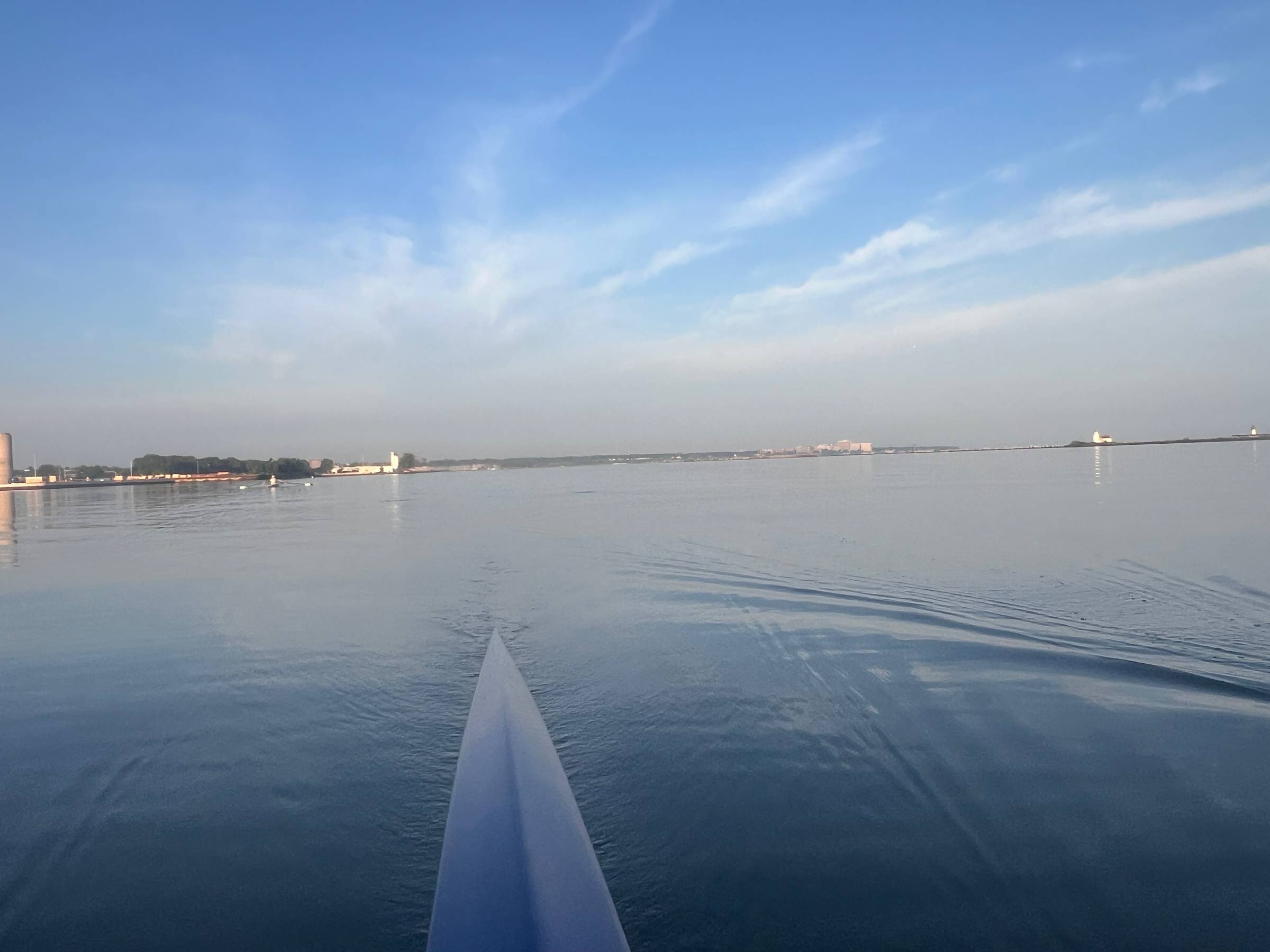
I row on the Cuyahoga River but sometimes on Lake Erie, and we always keep a close eye on lake conditions.
We only go out to the lake when winds are mild and the water is calm.
But sometimes when we’re out there, a wind shift comes through or a power boat sends rollers our way. Or we’re not entirely sure the lake is calm enough but we won’t know until we get out there…we go anyway.
In those moments of less than ideal conditions we don’t fight it. We feel the water move beneath us, adjust, and keep going.
That’s the practice… staying open to what arrives, rather than needing everything to stay controlled and perfect.
When that happens, I’m not running my usual mental tape. I’m just there…
Responding, adapting, alive.
That’s hormesis at work.
What is hormesis?
Hormesis is the biological principle that low doses of stress… cold, heat, exertion or challenge, trigger adaptive responses that make us stronger and more resilient. It’s why exercise works. Why fasting works. Why cold plunges are getting so much attention right now.
Cold water immersion research shows measurable increases in norepinephrine (up to 300%), improved mood, reduced inflammation, and activation of the vagus nerve — your body’s built-in recovery switch. It’s not comfortable. That’s the point.
Comfort is costing us more than we think.
We’ve engineered discomfort almost entirely out of our lives, climate-controlled homes, temperature-perfect offices, every edge smoothed down.
There’s a hidden cost to that.
When we never face the rollers, we never find out what we’re made of. We stay inside a smaller version of ourselves.
Going out on Lake Erie, sitting in a cold shower, trying something that might not work … these aren’t reckless choices. They’re the laboratory where we discover ourselves.
They’re how the nervous system learns: I can handle more than I thought.
Microdosing psilocybin creates that opening neurologically. But so does the cold. So does the wind on the water.
So does any moment that pulls you out of the familiar and asks you to show up differently.
But what happens after the opening?
This is where integration matters. Microdosing can offer moments of clarity, a softening, a shift in perspective, a glimpse of something new. But those moments are subtle. They pass quickly. Without intentional integration, the insight moves through before you have a chance to really work with it.
Integration isn’t about analyzing what happened. It’s about going underneath… sitting with what’s there, letting it breathe, following it deeper.
It’s in that unhurried process of digging that realizations emerge. Not forced, not performed, but genuinely arrived at. These are the shifts that actually change how we live.
This week’s invitation: Find one thing that’s just outside your comfort zone. Not dangerous — just uncomfortable. Notice who you are on the other side of it.
The growth is in the gap.
If you’re curious about integration work — what it looks like to go deeper with the shifts that are already happening in you — I’d love to connect. Just reply to this email, or click below to book a discovery call.
With love,
Karen