
Full Capacity Living…
Rethinking Lawn Care: What If “Weeds” Were Actually a Sign of Health?
For years, we’ve been sold the idea that a “perfect” lawn is one that’s uniform, weed-free, and chemically maintained. But what if that vision is actually working against our health—and the health of our families, pets, and environment?
It may be time to look at our lawns differently.
The Truth About Dandelions
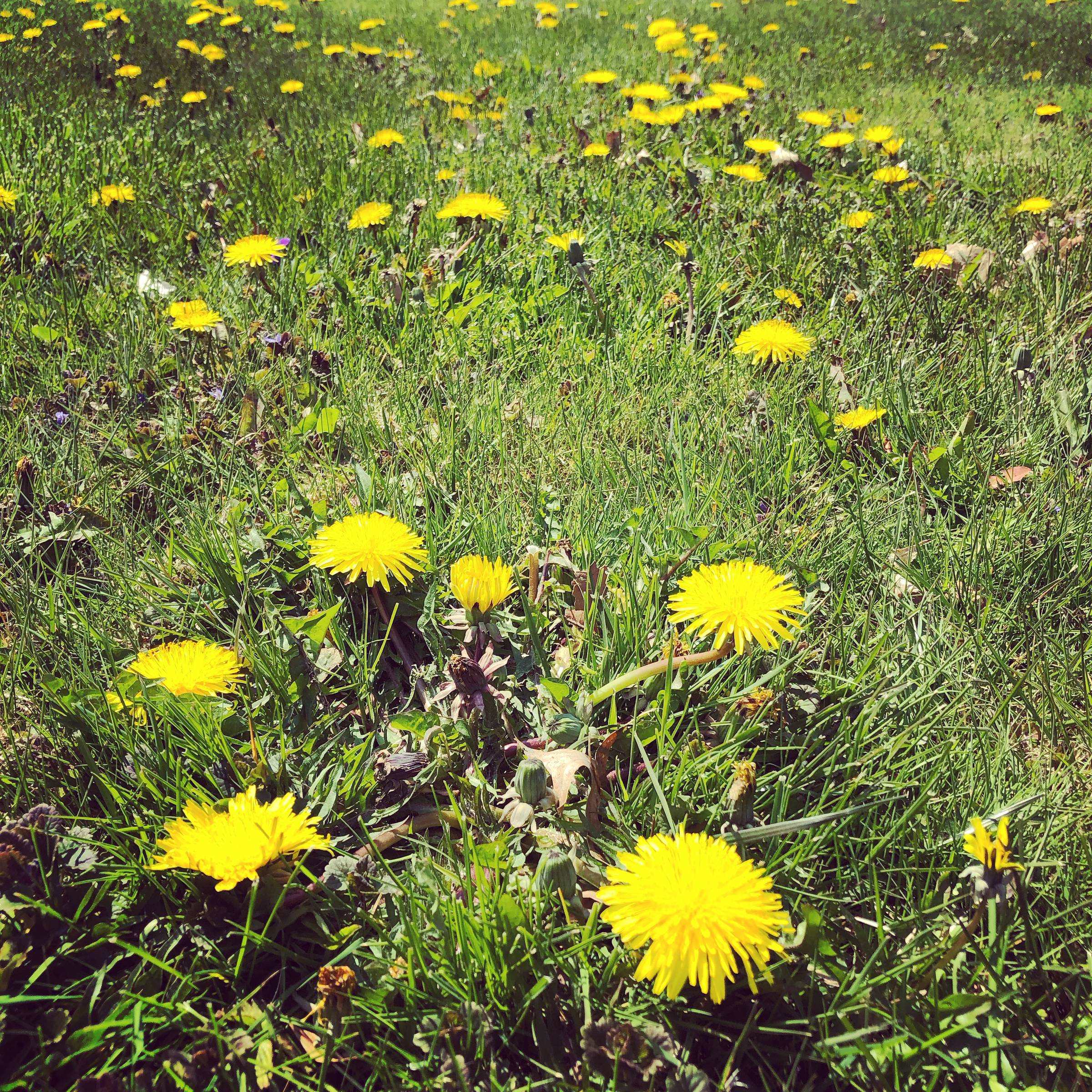
Dandelions are often treated like the enemy—but they’re actually one of nature’s most resilient and beneficial plants.
They:
- Improve soil health by breaking up compacted earth with deep taproots
- Provide early-season food for pollinators like bees
- Are entirely edible and rich in nutrients (supporting liver and digestive health)
Seeing dandelions in your yard is often a sign that your lawn is not saturated with toxic herbicides. In other words—it’s a living ecosystem.
We are lucky to have a few neighbors who share our pursuit of the living ecosystem…will you consider being the first on your street?
The more they’re scattered, the more they spread.
The more they’re pulled, the more they return.
Maybe there’s a lesson in that.
The Hidden Cost of Conventional Lawn Chemicals
Many conventional lawn care products contain herbicides and pesticides such as Glyphosate and 2,4-D. (Keep reading there is a solution)
Research has linked chronic exposure to these chemicals with:
- Increased risk of Non-Hodgkin lymphoma
- Disruption of the endocrine system (hormone imbalance)
- Neurodevelopmental concerns in children
- Respiratory irritation and skin conditions
- Potential impacts on gut microbiome health
Children and pets are especially vulnerable because they have more direct contact with grass and soil—and their detoxification systems are still developing.
Read this study from France on the wine industry and how they are changing practices
Even low-level, repeated exposure matters. These chemicals don’t just stay on your lawn—they can track into your home, linger on surfaces, and enter waterways.
Eco-Friendly Lawn Care Alternatives
The good news? You have options that support both a beautiful yard and a healthy environment.
Look for local lawn care companies that:
- Use organic fertilizers (compost, seaweed, natural minerals)
- Avoid synthetic herbicides and pesticides
- Focus on soil health and biodiversity
- Practice integrated pest management (IPM)
You can also shift your own approach by:
- Letting some “weeds” coexist
- Mowing higher to support root strength
- Overseeding with diverse grasses or clover
- Watering deeply but less frequently
Companion Planting: Nature’s Pest Control
In your garden, certain plants naturally repel pests—no chemicals required.
Consider planting:
- Marigolds – deter nematodes and aphids
- Basil – repels flies and mosquitoes
- Lavender – discourages moths and fleas
- Chives & garlic – help protect against fungal infections and insects
- Mint – keeps ants and beetles at bay (plant in containers—it spreads!)
This approach supports biodiversity and strengthens your garden’s resilience.
Why This Matters More Than Ever
We are living in a world where chemical exposure is constant—from food, water, air, and everyday products. Lawn chemicals are one of the exposures we can actually control.
Reducing this toxic burden:
- Supports long-term neurological and hormonal health
- Protects developing brains in children
- Reduces cumulative stress on detox pathways
- Preserves pollinators and soil ecosystems
It’s not about perfection—it’s about reducing load where we can.
A New Vision of “Healthy”
What if a healthy lawn wasn’t perfectly manicured…(I call them golf course lawns)
but alive, diverse, and chemical-free?
What if dandelions weren’t a nuisance…
but a quiet signal that your home is a safer place to land—for your kids, your pets, and the planet?
Maybe the goal isn’t to fight nature.
Maybe it’s to partner with it.
If this resonates with you and you think someone you know could benefit please share this email.
Together we can make the world a happier, healthier place.
In best health,
Karen

